The Influencer Marketing Funnel: From First Match to Repeat Deals
Discover how the influencer marketing funnel works in 2026 from first creator match to repeat deals and long-term brand partnerships.
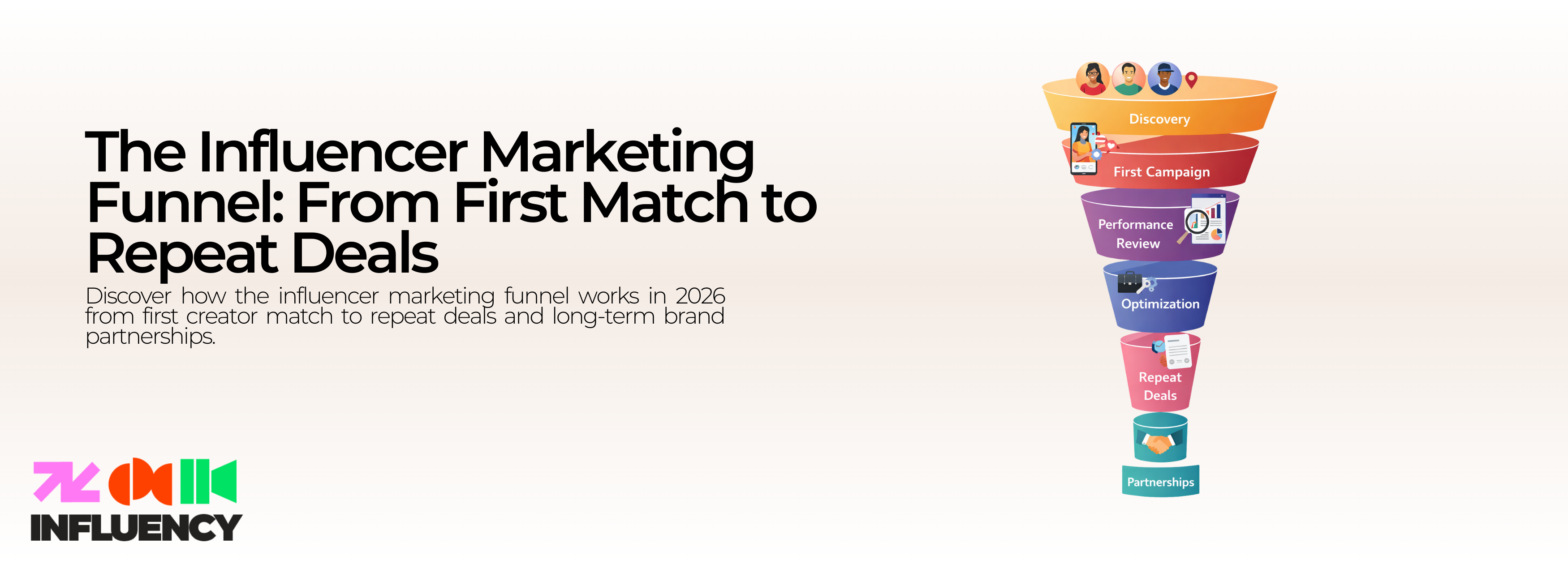
The Real Influencer Marketing Funnel: From First Match to Repeat Deals
For years, influencer marketing has been treated as a series of isolated campaigns: find a creator, brief them, post content, analyse results, then move on. But the brands winning in 2026 aren't running campaigns, they're building influencer marketing systems.
At the core of these systems is a simple idea:
The real ROI in influencer marketing doesn't come from first deals. It comes from repeat influencer collaborations.
To understand how brands scale influencer marketing sustainably, we need to shift from thinking in posts to thinking in funnels.
The Problem with One-Off Influencer Campaigns
Most influencer marketing strategies break after the first activation. Brands spend time discovering creators, negotiating rates, onboarding them, briefing content, approving posts, and processing payments only to repeat the entire process from scratch with new influencers.
This creates:
- High acquisition costs per creator
- Inconsistent brand storytelling
- No performance learning loop
- No long-term creator-brand relationship
In short, influencer marketing effort resets to zero after every campaign.
The Influencer Marketing Funnel Explained
A scalable influencer marketing strategy follows a clear funnel one designed to move from discovery to repeat deals.
1. Match / Discovery
This stage is not simply about finding influencers; it is about alignment. Audience relevance, content style, brand values, and commercial expectations all need to be in sync from the start. When a brand and creator are genuinely aligned, performance improves naturally and the foundation for repeat collaboration is established early.
2. First Campaign
The first campaign functions as a validation phase rather than a performance peak. The objective is not virality, but fit. Brands should evaluate whether the influencer understands the brand, delivers on time, produces authentic content, and drives natural audience engagement. At this stage, optimizing for signal over scale leads to better long-term outcomes.
3. Performance Review
This is where most influencer funnels break down. Instead of relying on static reports, brands should actively analyse which content performed best, why certain messages resonated, and what should be adjusted in future collaborations. Without a structured performance review, influencer campaigns become isolated experiments with no learning loop.
4. Optimization
Once a brand identifies what works, the next step is optimization. This means refining briefs, adjusting content formats, testing new messaging angles, and improving collaboration workflows. The goal is to turn early learnings into a repeatable playbook that drives better results with each activation.
5. Repeat Deals
When a creator consistently delivers strong results and understands the brand deeply, the relationship should evolve into a structured repeat deal. Repeat collaborations reduce onboarding time, lower costs, and produce content that resonates with the audience, because the creator genuinely knows and believes in the brand.
6. Long-Term Partnerships
The final stage of the funnel is the transition from repeat deals to a true long-term partnership. At this level, the creator becomes an extension of the brand. They contribute to strategy, co-create products, and build a lasting association that audiences recognize and trust. These partnerships deliver the highest ROI and the strongest brand equity.
Why the Funnel Matters More Than Individual Campaigns
Brands that operate without a funnel treat every influencer activation as a standalone experiment. They never compound their learnings, never deepen creator relationships, and never achieve the efficiency that comes from repeat collaboration.
The funnel approach transforms influencer marketing from a cost center into a scalable growth channel. Each stage builds on the last, creating a system where performance improves over time rather than resetting with every campaign.
How to Build Your Own Influencer Marketing Funnel
Building an effective influencer marketing funnel starts with a mindset shift. Instead of asking "Which influencer should we work with next?", brands should ask "Which creators have we already validated, and how can we deepen those relationships?"
Here are the key steps to get started:
- Audit your current creator relationships: identify which past collaborations delivered the best results and why.
- Define your funnel stages: map out how creators move from discovery to long-term partnerships within your brand.
- Invest in performance review systems: build processes to actively analyse and learn from every campaign.
- Prioritize repeat collaborations: allocate budget toward proven creators rather than constantly sourcing new ones.
- Use data to guide decisions: let performance data, not gut feeling, determine which creators move through your funnel.
The Bottom Line
The brands that will win in influencer marketing in 2026 and beyond are the ones that stop treating it as a series of one-off campaigns and start building systematic funnels. From first match to repeat deals, every stage of the funnel creates compounding value for the brand, the creator, and the audience.
The influencer marketing funnel isn't just a framework. It's the difference between spending on influencers and investing in influencer marketing.
Ready to build your influencer marketing funnel?
Discover how Influency helps brands move from first creator match to repeat deals with AI-powered discovery, performance tracking, and partnership management.
Book a DemoRelated articles
Planning a campaign? See how pricing works.