Engagement Metrics vs Performance Metrics: How to Use Each in 2026
How Engagement and Performance Metrics Drive Smarter Marketing Decisions
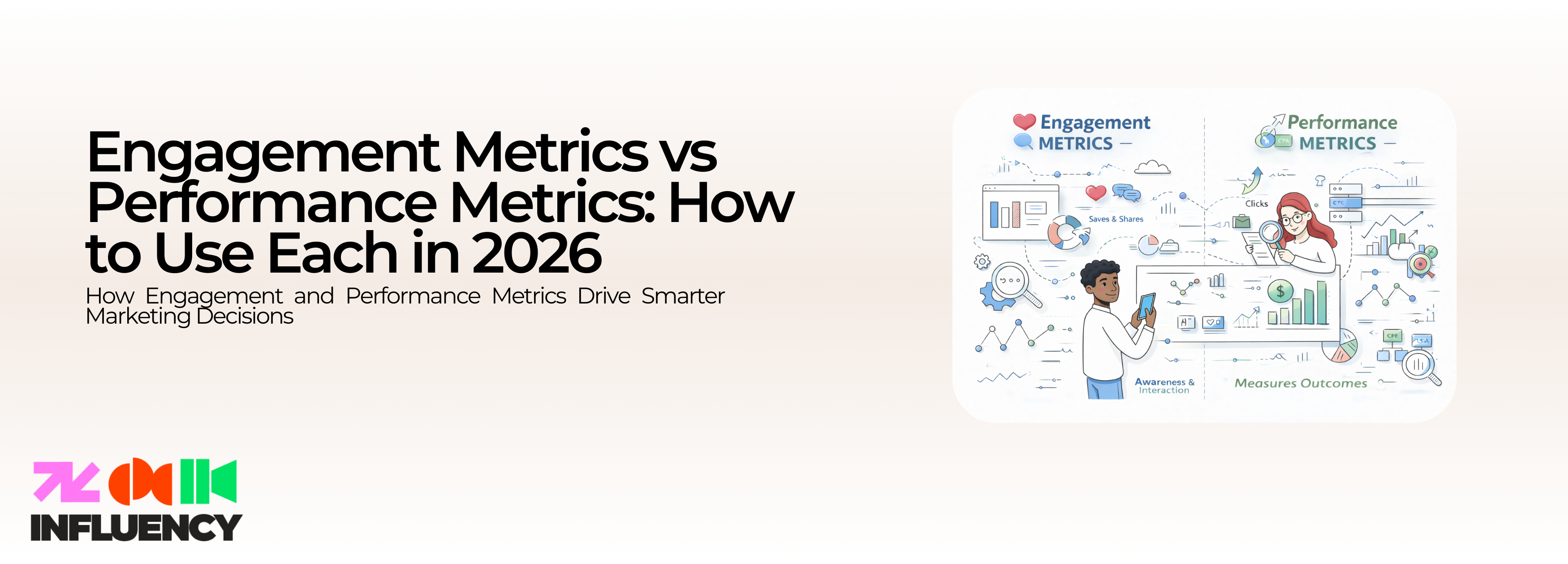
In modern digital and influencer marketing, metrics are everywhere. Brands and Influencers track likes, comments, views, clicks, conversions, and sales, often presenting them side by side in reports as if they all measure the same thing. They do not.
High-performing brands understand that engagement metrics and performance metrics serve fundamentally different purposes. Confusing the two leads to poor optimization decisions, unrealistic expectations, and inefficient marketing spend.
Understanding what each metric type is designed to measure and when to use it is essential for building scalable, repeatable marketing systems.
What Are Engagement Metrics?
Engagement metrics measure how audiences interact with content after it reaches them. They capture attention, interest, and relevance by tracking behaviours such as likes, comments, shares, saves, or spending time with content.
These metrics help brands understand whether content resonates with an audience and whether messaging, format, and creator alignment are effective. Engagement metrics are diagnostic by nature. They reveal how people respond, not what they ultimately do.
In 2026, engagement metrics are best interpreted as signals of audience connection, not indicators of business success on their own.
What Are Performance Metrics?
Performance metrics measures outcomes. They track whether marketing activity leads to concrete actions such as website visits, sign-ups, purchases, or revenue.
Unlike engagement metrics, performance metrics are outcome-driven. They answer whether a campaign contributed to growth, efficiency, or return on investment. These metrics are critical for budgeting, forecasting, and scaling decisions.
In short, performance metrics quantify impact, not interest.
Engagement Metrics vs Performance Metrics
Engagement metrics are most useful in the early and middle stages of the marketing funnel. They help brands understand whether content resonates, whether a creator is well aligned with their audience, and whether messaging is landing as intended. Performance metrics become more meaningful later, once resonance has been validated and the goal shifts toward driving measurable action.
The time horizon for engagement metrics is typically exploratory, supporting learning and optimization by revealing patterns in how audiences respond to content. Performance metrics operate on an outcome-focused timeline, informing decisions around scaling, budget allocation, and return on investment.
When used in isolation, both metric types carry risk. Engagement metrics alone can encourage vanity-driven decisions that prioritize visibility over impact. Performance metrics alone can lead to premature conclusions, causing brands to abandon creators or strategies before they have had time to compound.
Quick Comparison
| Engagement Metrics | Performance Metrics | |
|---|---|---|
| What they measure | Audience interaction & interest | Outcomes & business impact |
| Examples | Likes, comments, shares, saves, watch time | Clicks, sign-ups, purchases, revenue, ROAS |
| Best used for | Content optimization, creator alignment | Budgeting, scaling, ROI decisions |
| Funnel stage | Top & mid-funnel | Bottom funnel |
| Time horizon | Exploratory, ongoing | Outcome-focused, campaign-end |
| Risk if used alone | Vanity-driven decisions | Premature conclusions |
How to Use Both Metrics Together
The most effective marketing strategies use engagement and performance metrics in combination. Engagement metrics provide the diagnostic layer: they help brands understand what is working and why. Performance metrics provide the accountability layer: they confirm whether marketing activity is driving real business results.
A practical approach is to use engagement metrics to learn and optimize, and performance metrics to evaluate and scale. During the early stages of a campaign or creator partnership, focus on engagement signals to refine messaging, content format, and audience alignment. As confidence builds, shift attention toward performance metrics to measure return on investment and inform budget decisions.
This layered approach prevents brands from over-indexing on either metric type and supports more balanced, sustainable marketing decisions.
Common Mistakes to Avoid
- Treating engagement as a performance indicator: high likes and comments do not automatically translate to sales or sign-ups. Engagement signals interest, not conversion.
- Judging creators solely on performance metrics too early: new partnerships need time to build audience trust. Cutting a collaboration short based on first-campaign conversions misses the compounding value of repeat deals.
- Reporting both metric types without context: presenting engagement and performance data side by side without explaining their different roles leads to confusion and poor decision-making.
- Ignoring engagement data after launch: even after a campaign ends, engagement patterns contain valuable insights that should inform future strategy and creator selection.
The Bottom Line
Engagement metrics and performance metrics are both essential, but they are not interchangeable. Engagement metrics tell you whether your content and creator partnerships are resonating. Performance metrics tell you whether they are driving real business outcomes.
The brands that will win in influencer marketing in 2026 are the ones that understand the difference, use each metric type at the right stage, and build systems that combine both into a clear, data-driven decision-making framework.
Ready to track the metrics that matter?
Discover how Influency helps brands measure both engagement and performance across every creator partnership, so you can optimize smarter and scale faster.
Book a DemoRelated articles
Planning a campaign? See how pricing works.